Application Solution Series: Edge AI Vision
ESP32-S31 delivers stronger on-device inference for edge AI vision applications through coordinated improvements in CPU frequency, AI instruction-set acceleration, and memory bandwidth. Combined with the unified ESP-DL model deployment framework, developers can deploy vision models to the device more efficiently, enabling low-latency, privacy-focused local recognition.
This article showcases ESP32-S31 edge vision AI capabilities through several typical demos, including face tracking, human pose keypoint detection, object detection, and static gesture recognition.
Faster, Stronger, Easier
ESP32-S31 improves across compute power, AI-specific acceleration, and memory bandwidth—together forming its edge vision AI advantage.
Faster — Compute Leap
ESP32-S31 raises the CPU frequency from 240 MHz on ESP32-S3 to 320 MHz, with overall CoreMark performance up by approximately 65%. The higher clock speed directly reduces per-frame inference time and frees up CPU headroom, allowing other tasks to run in parallel with AI inference.
Stronger — AI Hardware Acceleration
ESP32-S31 integrates AI instruction-set acceleration designed for neural network inference, offloading core operators such as convolutions to hardware for efficient execution. At the same time, PSRAM interface bandwidth increases significantly from 80 MHz to 250 MHz (roughly 3× that of ESP32-S3), effectively eliminating data-movement bottlenecks during inference with large-parameter models.
Easier — Unified Model Deployment
ESP32-S31 shares Espressif's ESP-DL on-device inference framework with ESP32-S3, providing a unified model deployment entry point. Models trained with PyTorch / TensorFlow can be loaded and run directly after quantization to .espdl, with AI acceleration capabilities for each chip invoked automatically. The same toolchain and APIs work across both chips—no need to rewrite deployment code for different chips.
Measured Performance
Benchmark data from the official component library offers a clearer view of ESP32-S31's edge AI advantage. With the same models, ESP32-S31 achieves several-fold lower inference latency compared with ESP32-S3, reflecting the real-world gains from +65% compute and 3× PSRAM bandwidth.
Object Detection · YOLO11n (COCO 80 classes, input 640×640)
| Chip | Preprocessing (ms) | Inference (ms) | Post-processing (ms) |
|---|---|---|---|
| ESP32-S3 | 51.7 | 26057.1 | 58.0 |
| ESP32-S31 | 26.0 | 8701.2 | 23.1 |
ESP32-S31 inference time is approximately 1/3 that of S3 (8701 ms vs 26057 ms).
Cat Detection · ESPDet-Pico (input 224×224)
| Chip | Preprocessing (ms) | Inference (ms) | Post-processing (ms) |
|---|---|---|---|
| ESP32-S3 | 8.2 | 123.4 | 1.0 |
| ESP32-S31 | 4.9 | 89.0 | 1.0 |
On lightweight models, ESP32-S31 inference takes only 89 ms (~11 FPS), roughly 28% faster than S3.
Typical Application Scenarios
In edge AI vision scenarios, ESP32-S31 performs local recognition on camera frames, covering common tasks such as faces, human bodies, objects, and gestures, helping devices gain richer environmental perception and interaction capabilities.
Face Tracking
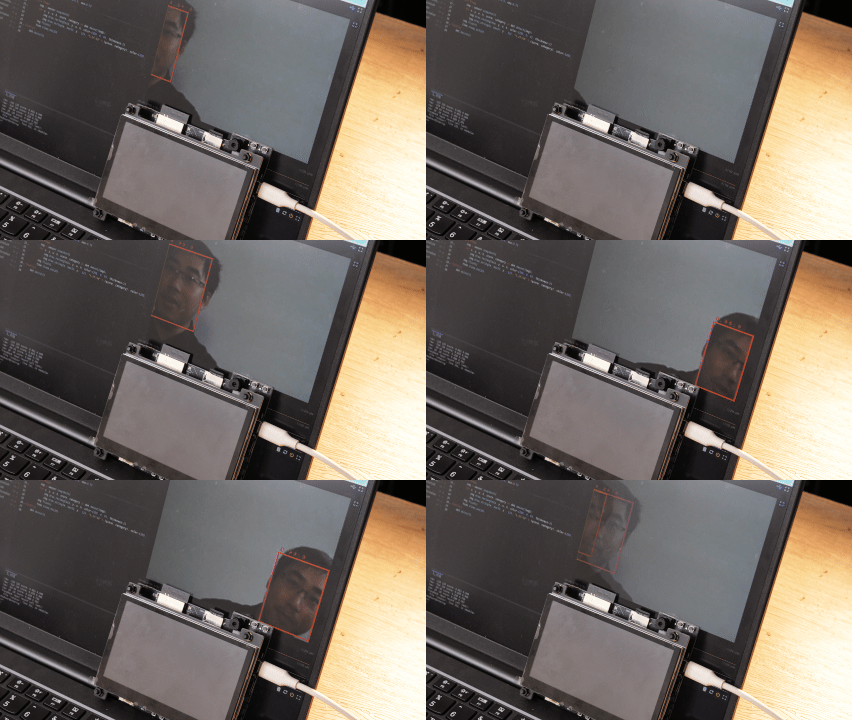
Recognize and track faces in the frame in real time, with stable awareness of presence and movement. Suitable for smart doorbells, screen-equipped speakers, desktop robots, and similar use cases—delivering low-latency, privacy-preserving visual perception without uploading raw video.
Human Pose Keypoint Detection
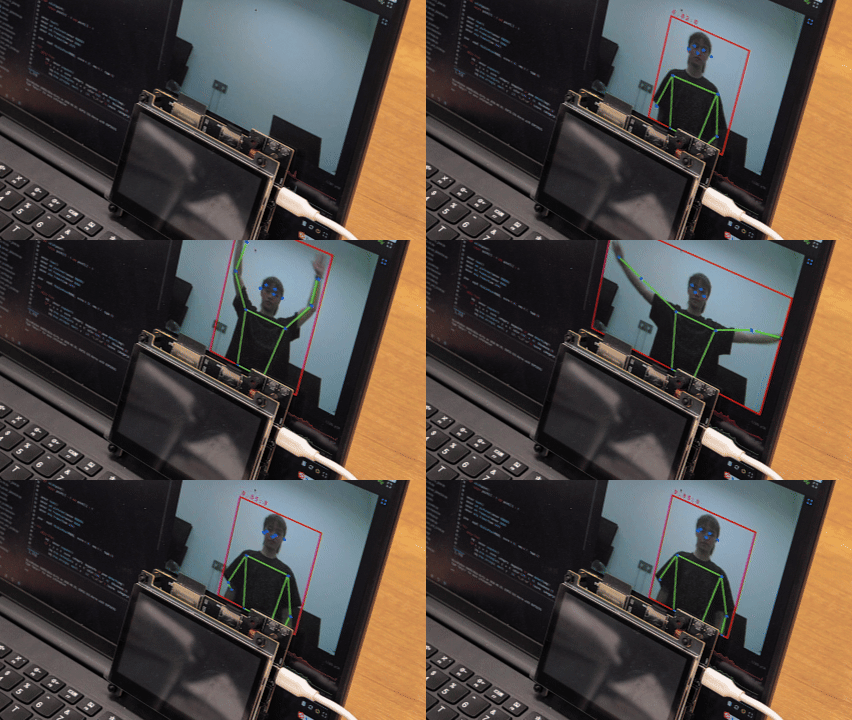
Detect key human joint positions. Based on keypoint data, further capabilities such as posture assessment, motion counting, motion-based gaming, and fall detection can be implemented. High-bandwidth PSRAM and AI acceleration make continuous multi-keypoint inference smoother, ideal for fitness equipment and motion-interaction products.
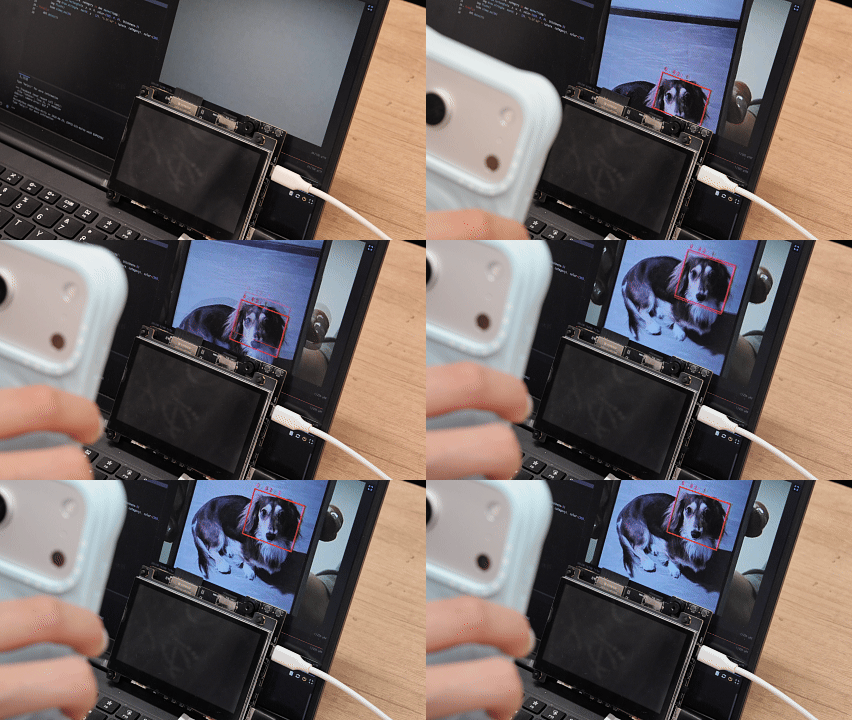
Object Detection
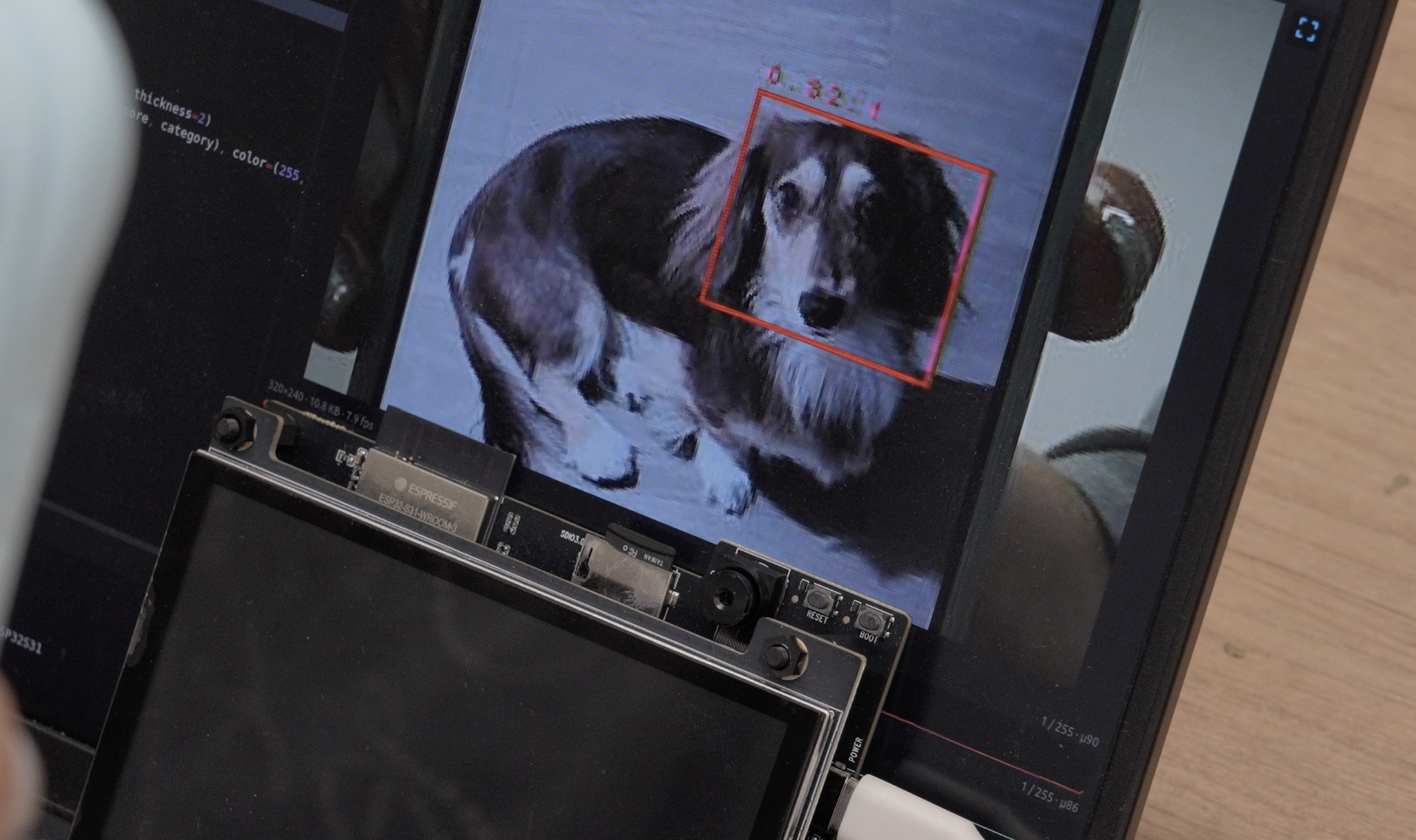
Recognize objects in the frame in real time, supporting 80 common categories including vehicles, animals, and everyday items. Suitable for smart home sensing, companion robots for children, warehouse sorting assistance, outdoor inspection, and other scenarios that require understanding the surrounding environment.
Gesture Recognition
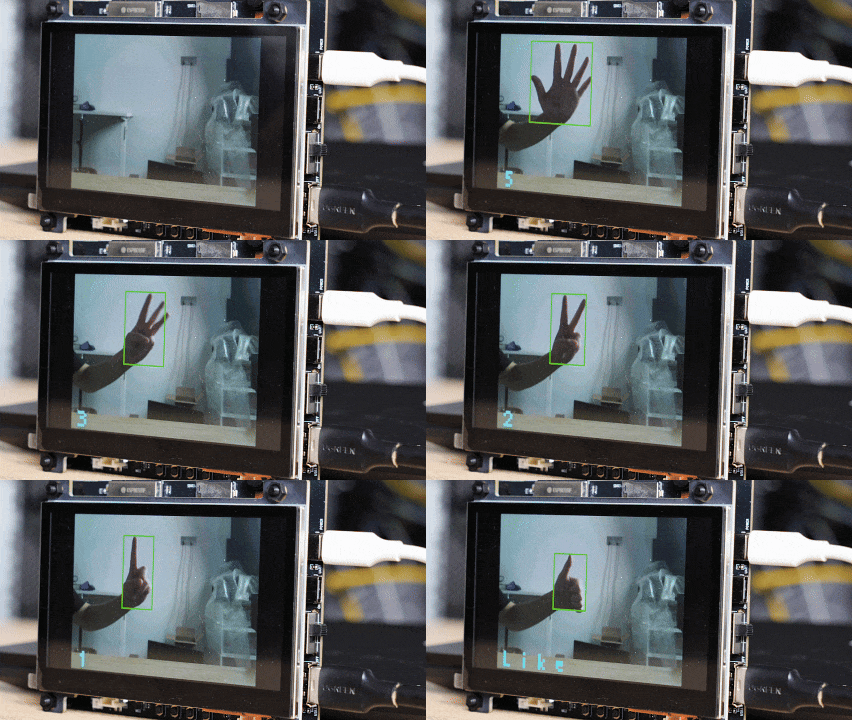
Recognize static gestures such as OK and translate user actions into device commands, suitable for on-screen feedback, feature switching, and other interaction scenarios.